
- News & Comment
-
Online Shop
Online Services
Looseleafs
Law Reports
Books and eBooks
-
CPD & Events
Webinars
- Authors
- About Family Law
- Contact
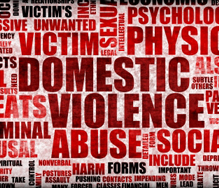
Children affected by domestic abuse are not being consistently recognised or supported as victims in their own right, despite clear statutory provisions to that effect, according to a new joint inspection report by four national inspectorates.
The report, published following inspections across six local authority areas, was produced jointly by Ofsted, the Care Quality Commission (CQC), His Majesty’s Inspectorate of Constabulary and Fire & Rescue Services (HMICFRS), and His Majesty’s Inspectorate of Probation (HMIP). It examines the multi-agency response to children who are at risk of, or victims of, domestic abuse, drawing on evidence from children’s social care, health services, policing, probation, youth justice and education.
The findings raise concerns that, in practice, professional responses in some areas remain overly focused on adult victims, with insufficient attention paid to children’s experiences, risks and needs. This is despite the Domestic Abuse Act 2021, which expressly recognises children as victims of domestic abuse where they see, hear or experience the effects of abuse.
Inspectors found significant variation in how local agencies identify children affected by domestic abuse, assess risk and coordinate safeguarding responses. In some cases, children’s experiences were poorly recorded or absent altogether from police reports, safeguarding referrals and multi-agency discussions. This limited professionals’ ability to understand the cumulative impact of abuse on children or to assess the ongoing risk posed by perpetrators.
The report highlights particular weaknesses in understanding and responding to coercive and controlling behaviour, with inconsistent levels of training across frontline services, including police and social workers. Inspectors warned that gaps in professional knowledge can result in missed opportunities for early intervention and protection.

Information sharing was identified as a persistent concern. Although agencies often held relevant intelligence about adult victims, perpetrators and children separately, this information was not always systematically brought together. Inspectors noted that fragmented information-sharing arrangements undermined the ability of professionals to form a full picture of risk and to take coordinated safeguarding action.
While the overall findings were critical, inspectors also identified examples of effective practice. Strong work was noted in relation to unborn babies, particularly where midwives demonstrated professional curiosity and awareness of domestic abuse risks. Schools and early years settings were also found to play a key role in identifying concerns and providing stability and support for children affected by abuse.
The report follows a previous joint targeted area inspection carried out in 2017 and concludes that, although there have been pockets of improvement, progress has not been sufficiently consistent or widespread. Inspectors described the current position as falling short of the expectations set by the Domestic Abuse Act.
The inspectorates identified forthcoming legislative reform as an opportunity to address these systemic issues. In particular, the Children’s Wellbeing and Schools Bill was highlighted as a potential vehicle for strengthening early help, improving multi-agency child protection arrangements and enhancing information sharing between services.
For family law and children law practitioners, the findings reinforce the importance of ensuring that children are treated as victims in their own right within safeguarding processes, public law proceedings and multi-agency assessments. The report underscores the need for trauma-informed, child-centred practice and robust challenge where children’s experiences risk being overshadowed by adult-focused interventions.
The inspectorates have indicated that they will continue to monitor progress through future inspections, with a clear expectation that local partnerships demonstrate measurable improvement in recognising, recording and responding to domestic abuse involving children.